A conference succeeds or fails at the production stage. The topics chosen, the structure of the program, the balance of sessions, and the narrative that runs through the event from opening to close — these decisions shape everything that follows. A poorly produced conference creates problems that no amount of sales effort or marketing spend can fix. A well-produced conference makes every other commercial activity easier and more effective.
This program covers the full strategic role of the conference producer, from researching industry trends and identifying commercially relevant topics through to developing a program that attracts the right audience, supports organizational objectives, and creates the conditions for strong sponsorship, exhibition, and delegate sales. It treats conference production not as a creative function separate from the business, but as the commercial foundation on which the entire event depends.
The objective is to develop conference producers who think strategically as well as creatively, who understand the commercial implications of every content decision they make, and who can consistently produce events that attract the right audience, deliver genuine value, and meet their financial targets year after year.
- Researching industry trends, emerging challenges, and competitor events to identify topics that resonate with the target audience and differentiate the event
- Developing compelling and commercially relevant topics that differentiate the event and make it a priority for the target audience
- Developing a comprehensive program structure that balances keynotes, panels, workshops, and networking to maintain audience engagement throughout
- Aligning program content with the organization's commercial objectives, including sponsorship categories, delegate target markets, and exhibition opportunities
- Understanding how topic and session choices directly affect sponsorship revenue potential and delegate acquisition results
- Managing the production timeline and coordinating with sales, marketing, and operations to keep the event aligned commercially and operationally
- Preparing and delivering the sales brief that gives the delegate and sponsorship sales teams the commercial intelligence they need to sell effectively
- Evaluating program performance after each event to improve topic selection, structure, and commercial alignment for future editions
Most conference producers do not see themselves as sales professionals. Yet much of their role depends on their ability to influence decisions, create interest, overcome resistance, and secure commitments from people who are often busy, senior, and difficult to access. Whether securing a speaker, developing content, gaining internal support, or negotiating participation, production success depends on skills that are fundamentally commercial in nature.
This program focuses on the sales and influence skills that conference producers rarely receive formal training in. It covers how to reach decision-makers, navigate assistants and gatekeepers, establish credibility quickly, handle objections, ask the right questions, negotiate participation, and secure commitments professionally. The same principles that help sponsorship and delegate sales professionals succeed can dramatically improve a producer's effectiveness when building a conference program.
The objective is to help conference producers become more effective communicators, negotiators, and influencers. Producers who develop these skills secure stronger speakers, build better industry relationships, create more compelling content, and ultimately produce events that perform better commercially and strategically.
- Understanding why sales and influence skills are critical to successful conference production and program development
- Reaching senior executives, industry leaders, and subject matter experts by navigating assistants, gatekeepers, and internal filters professionally
- Building credibility and establishing rapport quickly when approaching potential speakers and industry contributors
- Presenting a compelling participation proposition that creates genuine interest and increases acceptance rates
- Handling common objections professionally, including time constraints, competing priorities, topic concerns, and scheduling conflicts
- Asking effective qualifying questions to determine relevance, commitment, and suitability before investing significant time and effort
- Negotiating participation, expectations, and content requirements while protecting the objectives of the event
- Applying proven sales and influence techniques to strengthen speaker acquisition, content development, and stakeholder engagement
Most conference producers are hired because they can build strong content and compelling programs. The best producers go further. They understand how their decisions influence delegate attendance, sponsorship revenue, exhibitor interest, and the overall commercial performance of the event. Content and commercial results are not separate disciplines. They are directly connected.
This program focuses on the commercial responsibilities of the conference producer. It covers how to work effectively with delegate sales teams, how to prepare sales briefs that genuinely support commercial conversations, how to collaborate with sponsorship teams to create and strengthen revenue opportunities, and how to make production decisions that contribute to both audience growth and financial performance.
The objective is to develop producers who think beyond content development alone. Producers who understand the commercial impact of their decisions contribute more effectively to event performance, work more successfully across departments, and consistently help deliver stronger financial results.
- Understanding how content decisions influence delegate attendance, sponsorship revenue, exhibitor participation, and overall event performance
- Preparing and delivering sales briefs that provide delegate and sponsorship sales teams with meaningful commercial intelligence
- Supporting delegate sales efforts by helping teams understand the program, target audience, industry themes, and key selling points
- Working with sponsorship teams to identify, develop, and strengthen commercial opportunities within the conference program
- Applying commercial thinking when selecting topics, speakers, formats, and program structure
- Understanding budget management, financial accountability, and revenue targets as part of the producer's role
- Balancing audience value, content quality, and commercial objectives when making production decisions
- Evaluating production decisions based not only on content quality but also on their impact on revenue, audience growth, and event performance
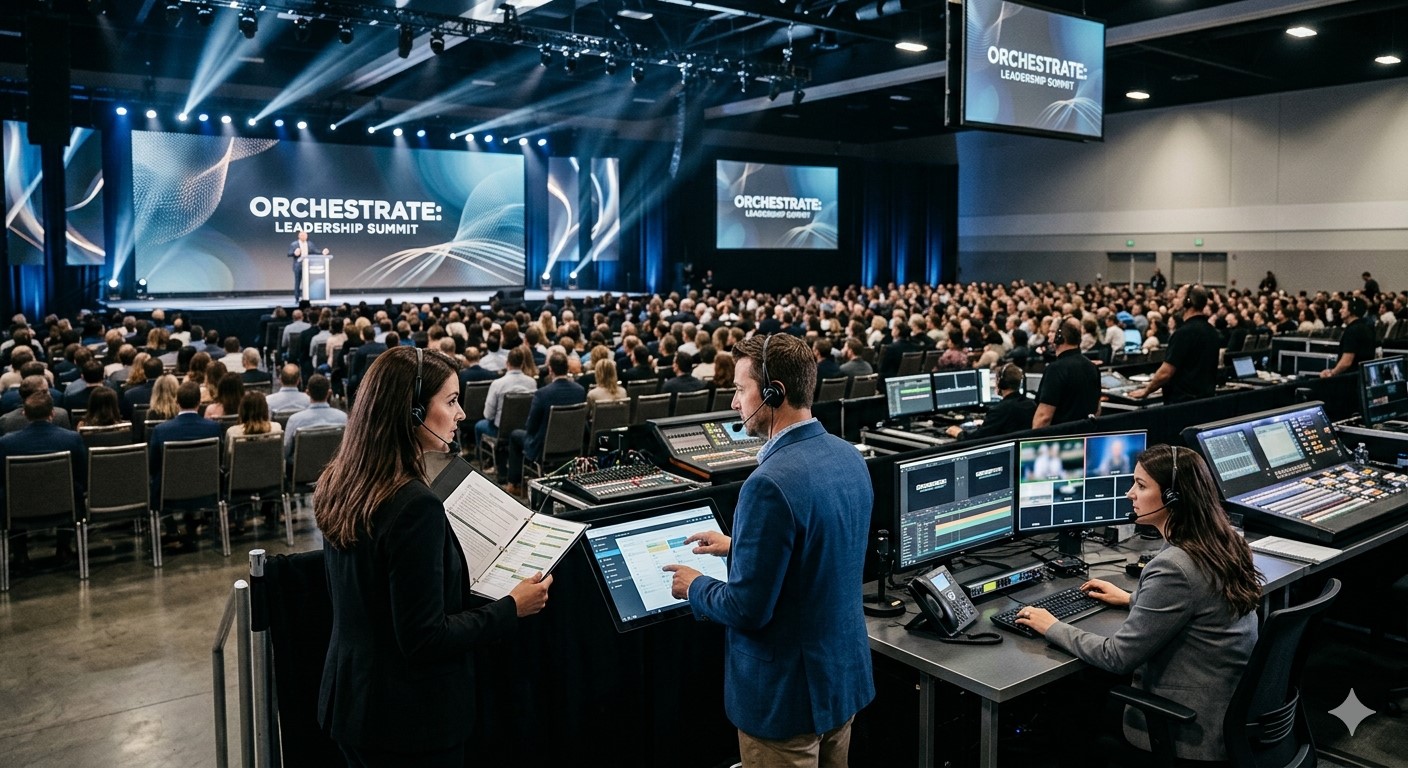
The event day is the moment when months of planning are tested in real time. Every detail matters — the relationship with the venue, the coordination of speakers, the management of the running order, and the ability to resolve issues quickly and calmly without the audience ever noticing. Producers who are unprepared for the realities of on-the-day management risk undermining an event that was well produced on paper but poorly delivered in practice.
This program covers the full scope of conference execution, from final event preparation and speaker management through to sponsor delivery, attendee experience, and on-site decision-making. It also addresses the post-event activities that drive long-term success, including delegate feedback analysis, commercial performance evaluation, sponsor review, and identifying the improvements that strengthen future editions of the event.
The objective is to develop conference producers who manage the day with the same precision and professionalism they applied to the production process, and who treat every event as a learning opportunity that informs and improves the next one. Events that improve year on year do so because someone evaluated the performance honestly and acted on what they found.
- Managing venue, hotel, and supplier relationships to ensure the event is delivered professionally and according to plan
- Coordinating speakers throughout the event, including final briefings, presentation management, timing control, and handling last-minute changes
- Managing the event flow in real time to maintain audience engagement, session quality, and a positive attendee experience from opening to close
- Anticipating and resolving operational, speaker, sponsor, or attendee issues quickly and professionally without disrupting the event experience
- Ensuring sponsor, exhibitor, and partnership commitments are delivered as promised and contribute positively to the overall event experience
- Collecting meaningful delegate, speaker, sponsor, and exhibitor feedback using methods that generate actionable insights
- Evaluating event performance against attendance, content, sponsorship, exhibition, and financial objectives
- Using post-event analysis to strengthen future topic selection, speaker recruitment, attendee experience, sponsorship opportunities, and overall event performance